Wood Fire Pits vs. Gas Fire Pits
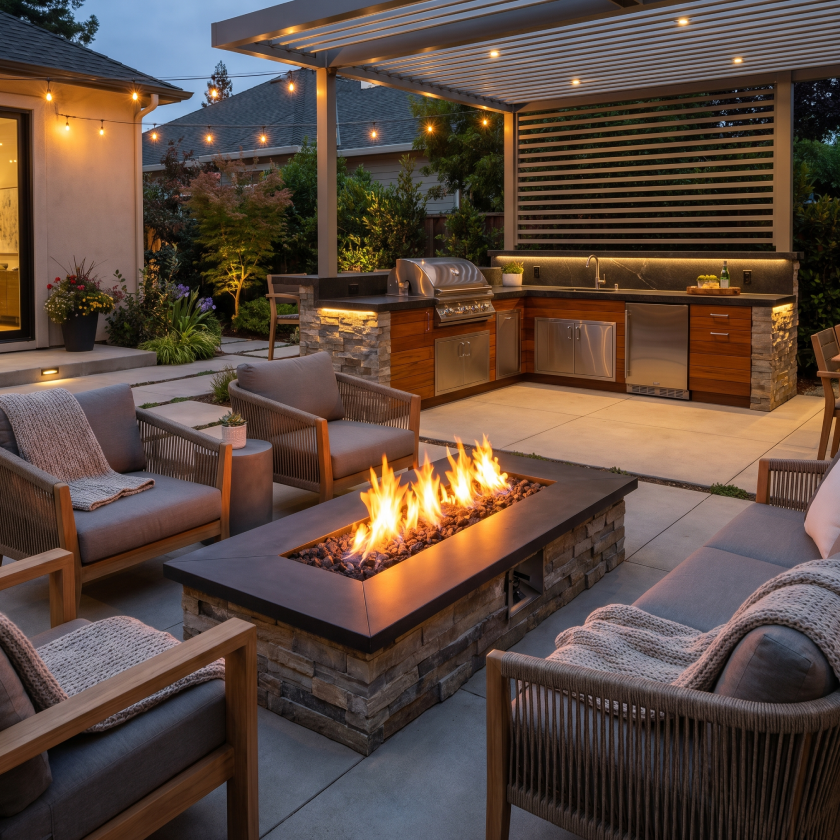
At ECOLIT, we manufacture outdoor kitchens using durable 18 gauge galvanized steel framing designed for long-term performance in exterior environments. A well-planned outdoor kitchen is more than a place to cook; it becomes the center of an outdoor living space where people gather, eat, relax, and spend time together.
One feature that often completes this type of space is a fire pit. Fire pits have become a popular focal point for patios, backyards, and outdoor kitchens because they add warmth, atmosphere, and a natural gathering area. When choosing a fire pit, one of the first decisions is the fuel source: wood, propane, or natural gas.
Both wood-burning and gas fire pits can work well, but they offer very different experiences. Wood provides a traditional flame, stronger natural heat, and the classic sound and aroma of a real fire. Gas offers convenience, cleaner operation, and easier control. Below is a practical comparison to help you decide which option fits your outdoor space better.
Fire Pit Fuel Type Comparison
The main difference between these two types of fire pits is how they are used day to day. A wood-burning fire pit requires firewood, manual lighting, and regular ash cleanup. A gas fire pit uses either propane or natural gas and is usually designed for quick start-up, simple shut-off, and lower maintenance.
The right choice depends on how you plan to use your outdoor area. If you want a traditional campfire-style experience, wood may be the better option. If you prefer convenience and a cleaner modern setup near an outdoor kitchen or patio seating area, gas may be more practical.
Wood Burning Fire Pits
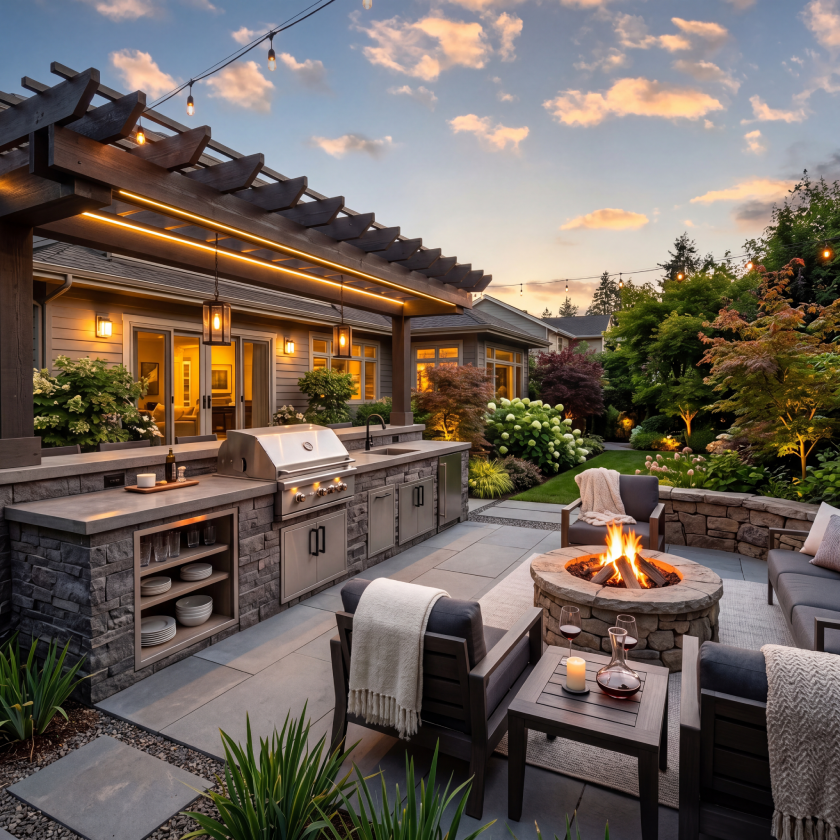
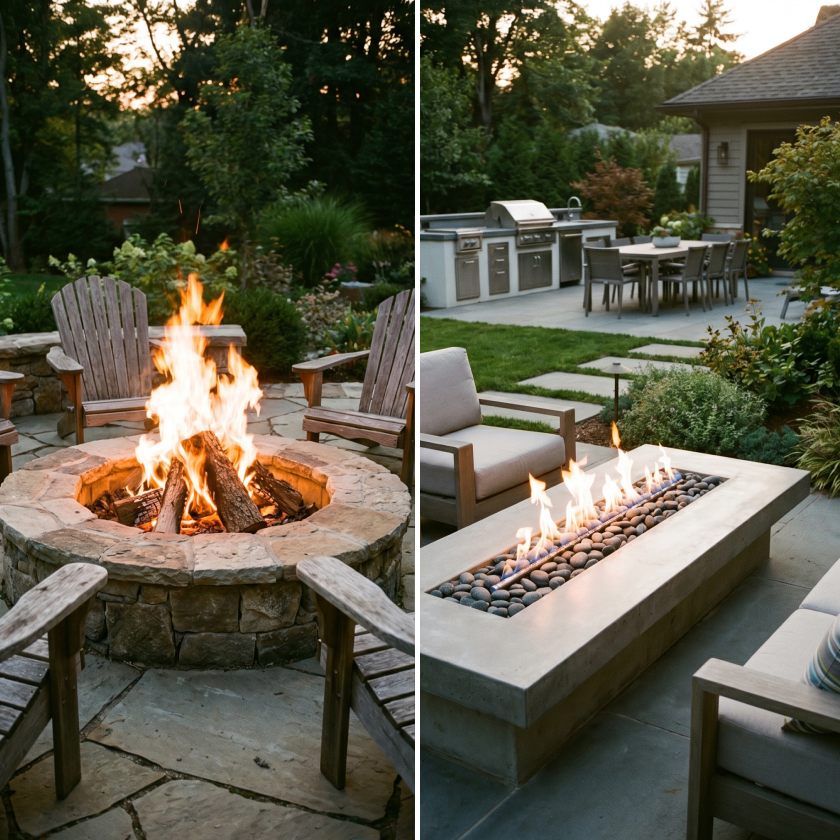
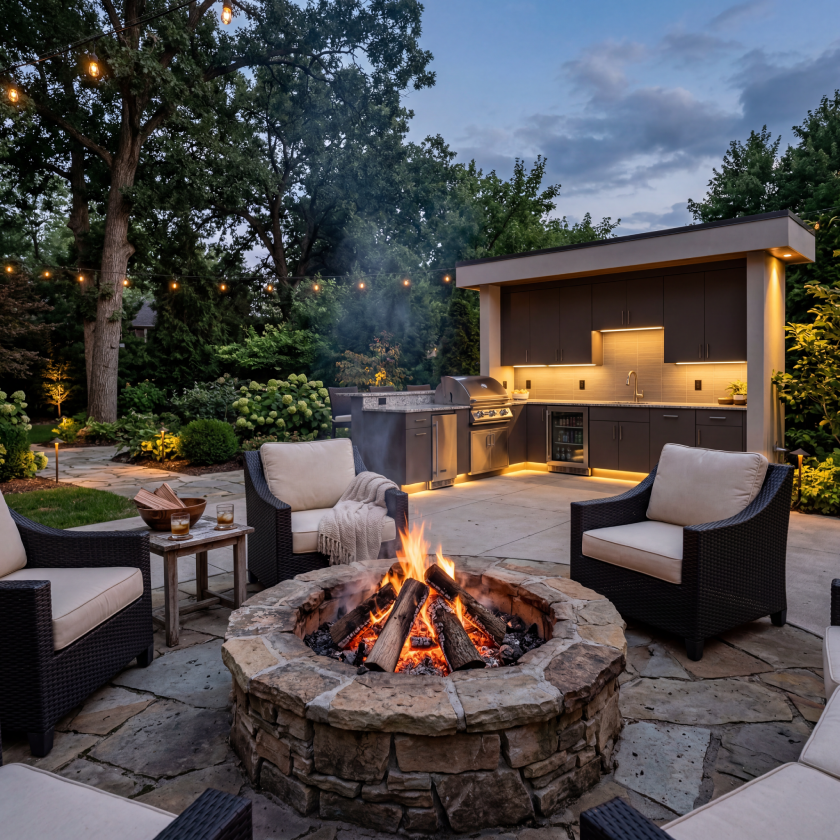
For many homeowners, nothing can fully replace the experience of a real wood fire. The crackling sound, smoky aroma, and natural movement of the flames create a traditional outdoor atmosphere. Wood-burning fire pits are often chosen for backyards where the goal is a relaxed, informal gathering space.
One of the main advantages of a wood-burning fire pit is heat. Wood generally produces a stronger and more noticeable warmth than a typical gas flame, which can make it more comfortable on cooler evenings. It also allows for simple fire-based cooking, such as roasting marshmallows, hot dogs, or using a grill grate over the flames.
However, wood fire pits require more effort. Firewood must be purchased or cut, stored properly, and kept dry. After use, ash and debris need to be removed. Smoke direction should also be considered, especially if the fire pit is located close to an outdoor kitchen, covered patio, windows, or neighboring properties.
Wood-burning fire pits are usually more budget-friendly and simpler to place than permanent gas units because they do not require a gas line. At the same time, they may be restricted by local fire codes, HOA rules, or seasonal burn regulations. Proper clearance from combustible materials is always important.
Wood-burning fire pits are known for their traditional flame experience, strong heat output, and ability to support simple roasting or cooking. Their drawbacks are smoke, ash cleanup, firewood storage, and more preparation before each use.
Gas Fire Pits
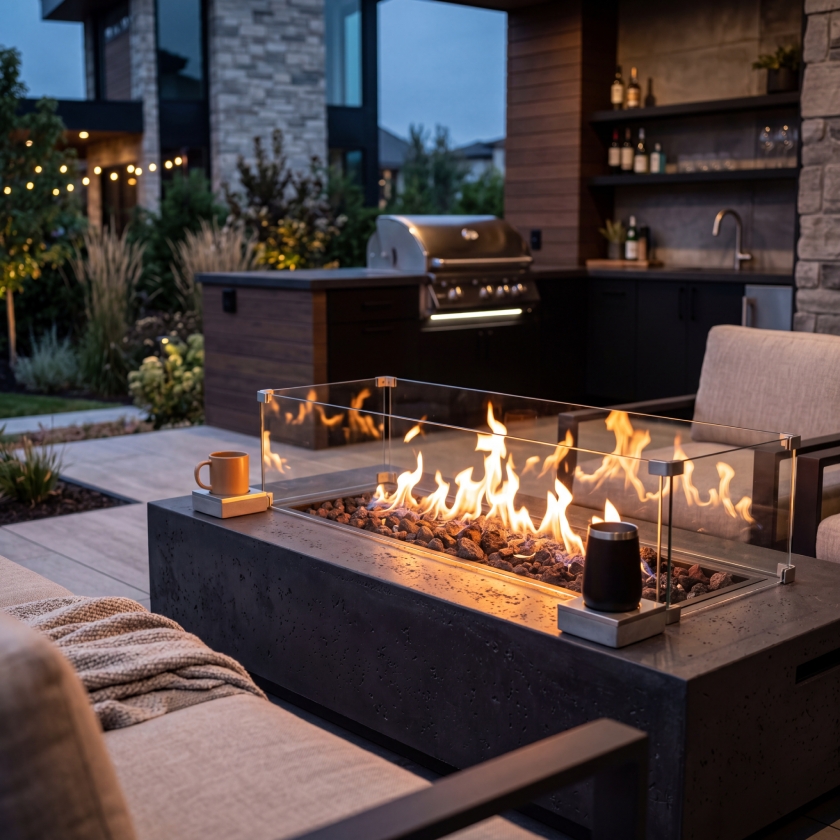
Gas fire pits are the better choice for homeowners who value convenience and clean operation. They can usually be started by opening a gas valve and using an ignition system, without chopping wood, lighting kindling, or waiting for the fire to build. This makes them especially practical for patios and outdoor kitchens that are used frequently.
Gas fire pits can run on propane or natural gas. Propane models offer flexibility when a fixed gas line is not available, while natural gas units are often integrated into permanent outdoor living projects. If an outdoor kitchen already includes gas appliances, a gas fire pit can sometimes be planned as part of the same overall utility layout, provided the system is designed and installed correctly.
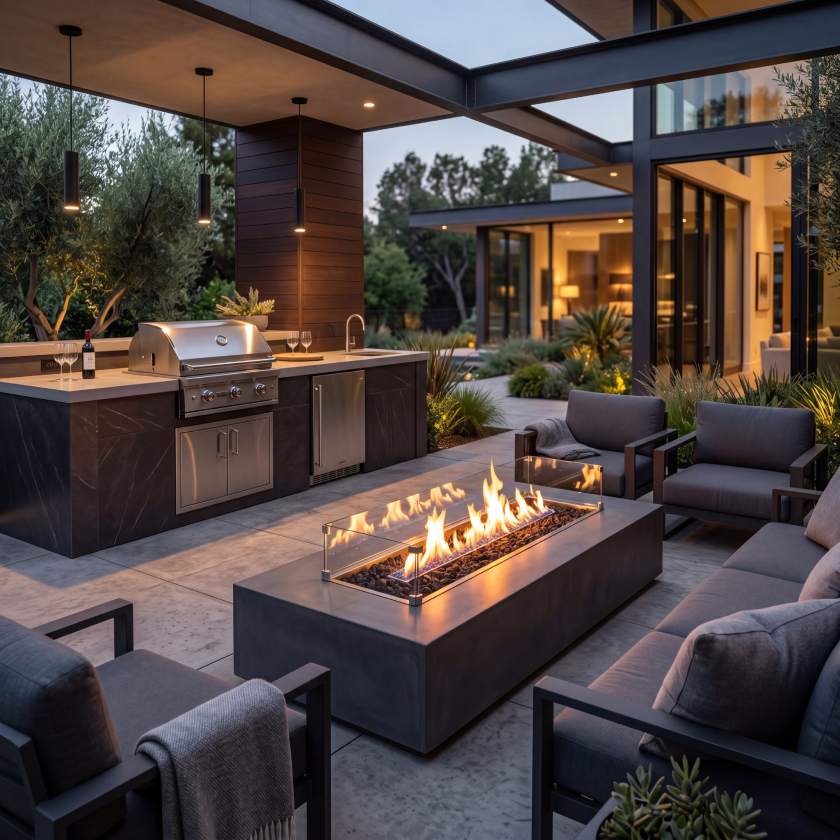
Another advantage of gas is low maintenance. Gas fire pits do not produce ash and generally create much less smoke than wood-burning models. This makes them easier to use near dining areas, lounge seating, finished patio surfaces, and modern outdoor kitchen installations.
Gas fire pits also offer more design flexibility. They are available in many configurations, including round fire bowls, rectangular fire tables, linear flame features, and built-in patio designs. Decorative materials such as lava rock, ceramic logs, or fire glass are often used to create a clean architectural appearance.
The main disadvantages are higher cost and more technical installation. Gas fire pits require proper burner components, ventilation, gas connections, shut-off access, and compliance with local codes. Natural gas units are usually fixed in place, while propane models require tank refills or replacement.
Gas fire pits are known for quick start-up, easy shut-off, clean operation, and modern design options. Their drawbacks are higher initial cost, installation requirements, and less of the traditional sound, smell, and heat intensity of a wood fire.
Which One Should You Choose?
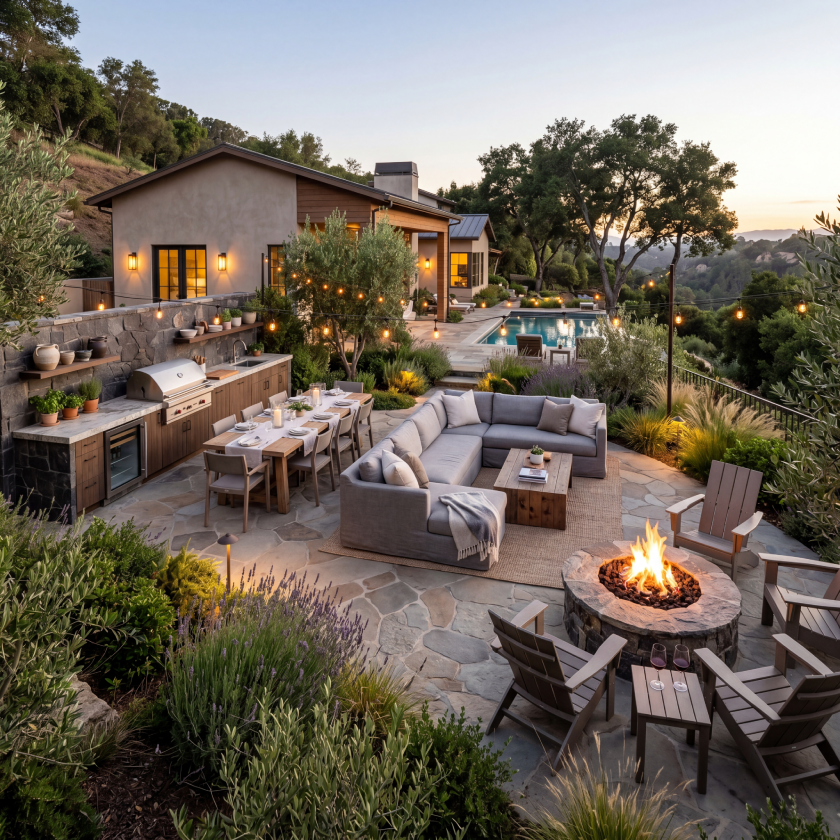
Both options can be a good fit depending on the project. A wood-burning fire pit is best for homeowners who want a traditional fire experience, stronger natural heat, and do not mind handling firewood and cleanup. It works especially well in larger outdoor areas where smoke and ash will not interfere with the kitchen, dining zone, or nearby structures.
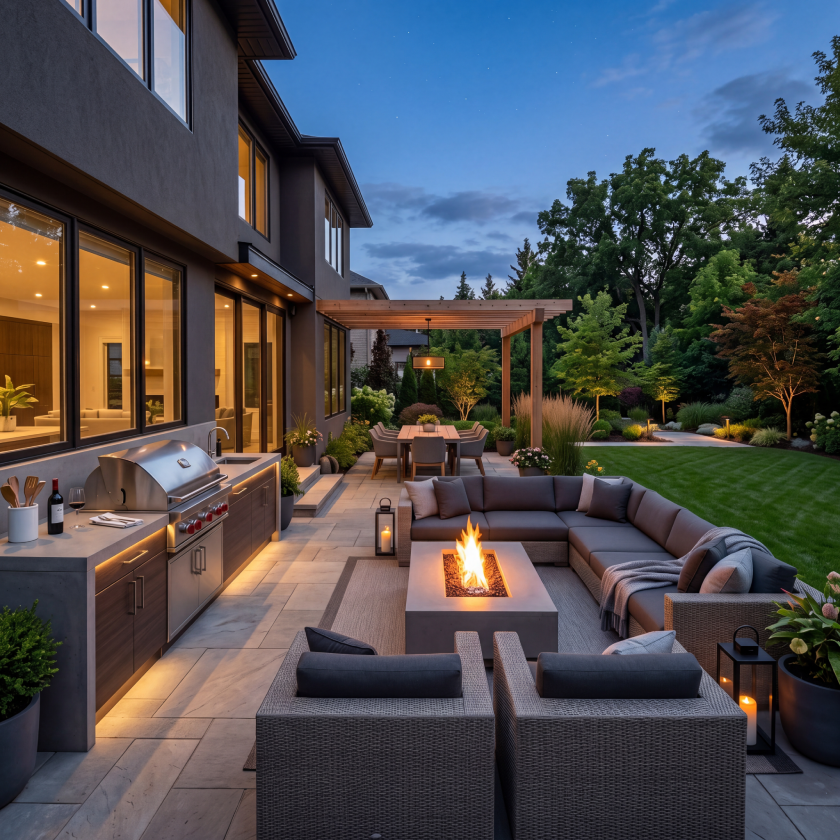
A gas fire pit is usually better for outdoor kitchens, modern patios, and compact outdoor living spaces where convenience matters. It is cleaner, easier to control, and better suited for frequent use. For ECOLIT outdoor kitchen projects, gas fire pits often integrate more naturally with a clean, durable, low-maintenance exterior environment.
When planning your outdoor kitchen and fire feature, the most important factors are layout, fuel access, safety clearances, local regulations, and the way you intend to use the space. The right fire pit should not only look good, but also support how your family and guests actually spend time outdoors.