Outdoor Quartz Countertops: Pros, Cons, and Outdoor Performance

Outdoor quartz countertops look premium, and many homeowners ask about using them outside. In our company we keep the explanation simple: most “quartz countertops” are not a solid slab of quartz. A true natural slab is called quartzite. What people usually buy as “quartz” is a manufactured surface made from crushed quartz mixed with resins, polymers, and pigments, typically about 90%–95% quartz.
In our company we understand why quartz is tempting.
Stain resistance: Quartz is nonporous, so it does not absorb water easily. Spills like coffee can usually be wiped up with a towel or soapy water.
Chip and scratch resistance: Quartz scores around 7/10 on the Mohs hardness scale, which is why it handles everyday use well.
Low maintenance: Quartz surfaces generally do not need resealing, which homeowners appreciate.
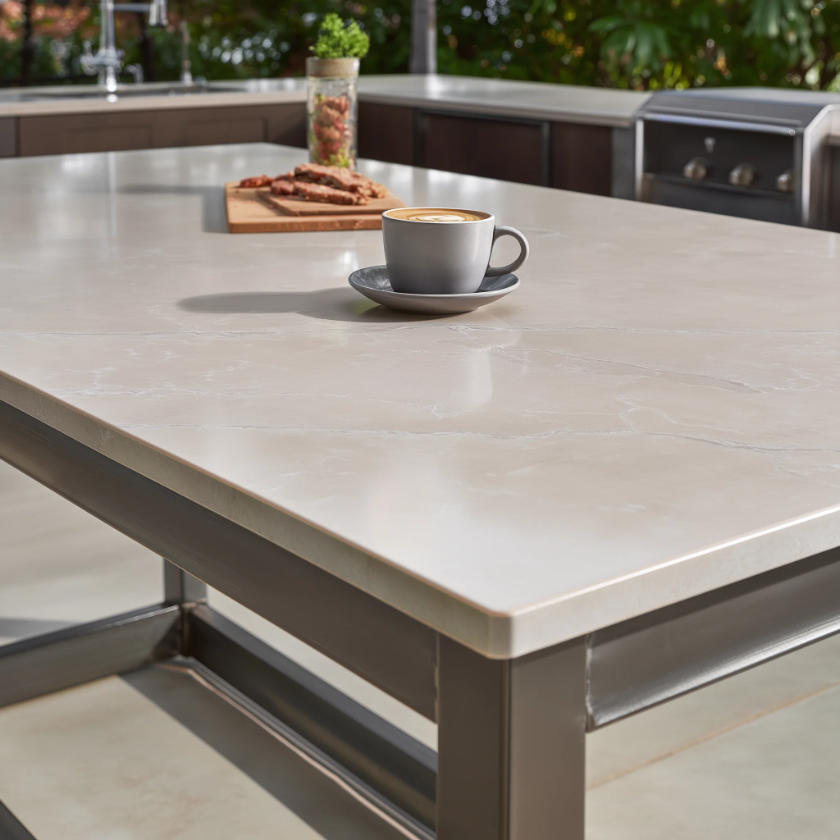
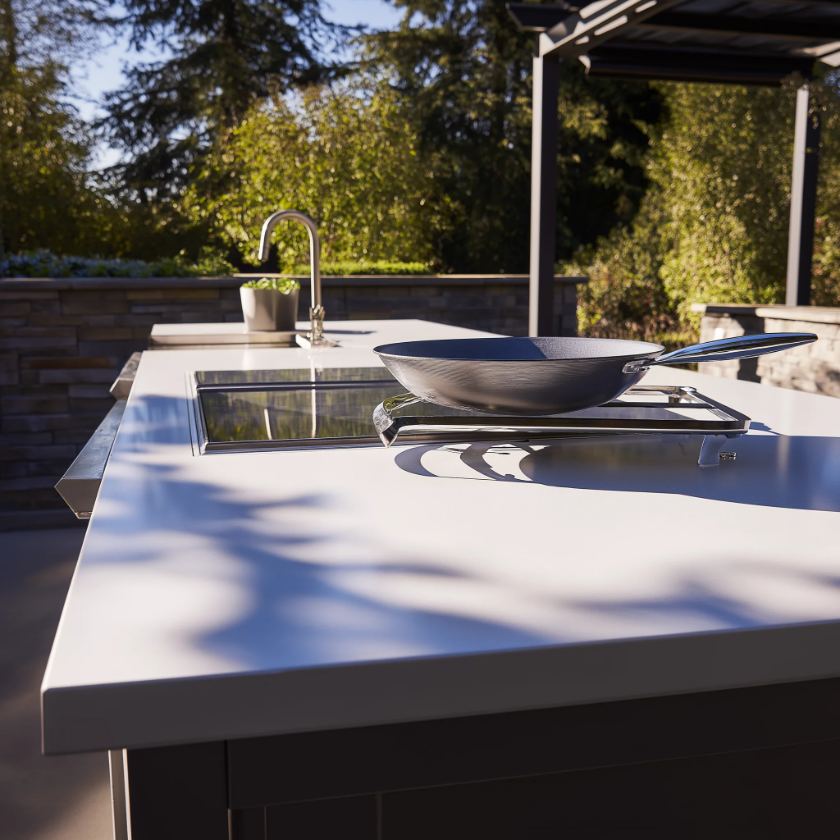
But for outdoor kitchens, we also focus on the downsides.
UV exposure: Direct sun can cause discoloration. Lighter quartz can yellow, and darker colors can fade. Shade structures can help, but they add complexity.
Heat sensitivity: Because quartz contains resins and polymers, high heat can damage the bond. A hot pan placed directly on the surface can be a problem, so trivets become mandatory.
Not fully natural: Some clients prefer the one-of-a-kind character of natural stone and do not want “filler” materials.
Ecolit Construction’s practical verdict is simple: most quartz is not ideal outdoors. If you are set on quartz, Caesarstone has an outdoor-rated line that is UV resistant and tested for outdoor temperatures from -13°F to 122°F (heat protection still matters).
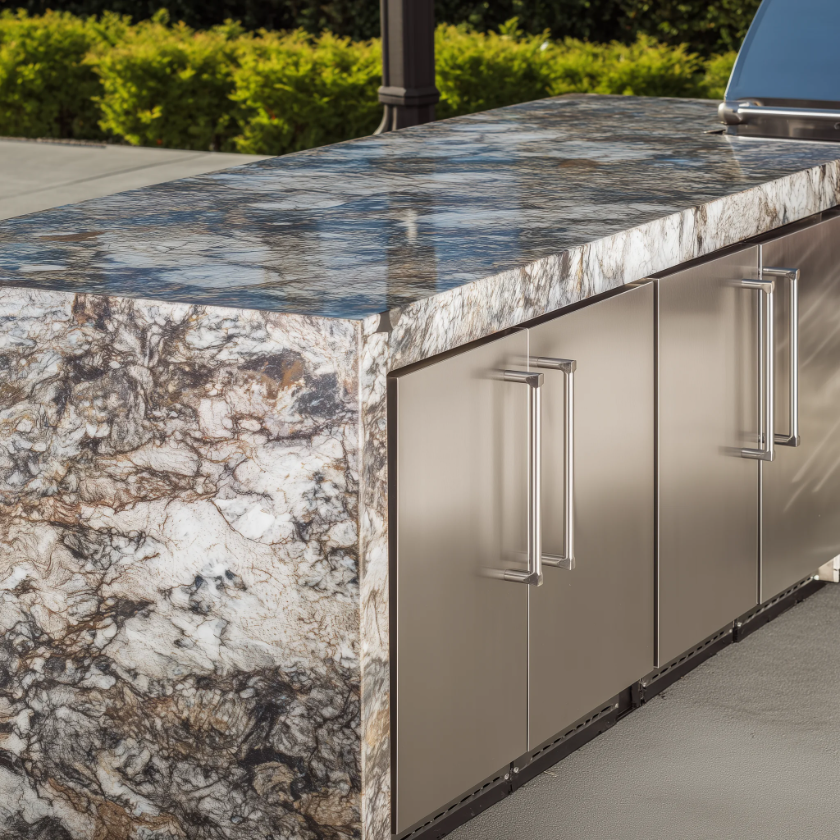
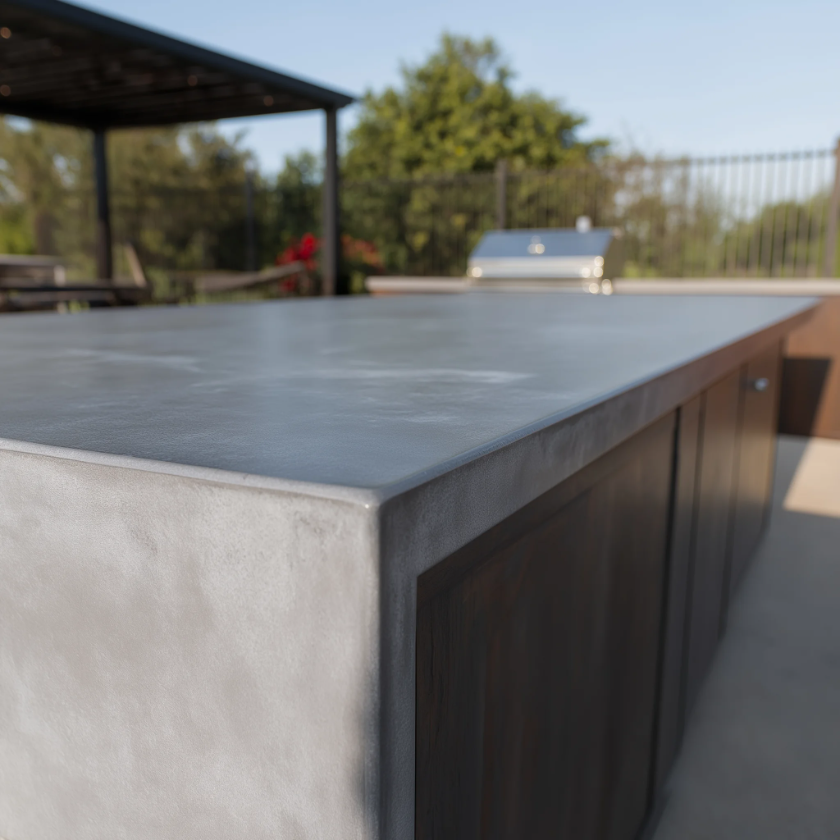
We create better long-term solutions by matching materials to outdoor reality. Granite offers a natural look with strong scratch resistance and strong heat performance. Concrete delivers an industrial style and handles outdoor conditions well, but it typically needs sealing every year or two.