Outdoor Kitchen Cleaning and Maintenance: What to Do and How Often

Outdoor kitchens live outside, so they collect grease, dust, pollen, and weather marks faster than an indoor kitchen. In our company we explain it like car care: a well-built system lasts longer when you clean it and do small maintenance on schedule. Regular cleaning keeps the island looking “new,” and it also helps you spot issues early.
In our company we follow three simple cleaning areas: the island body, the countertops, and the appliances.
1) Clean the island the safe way
We create a gentle routine. For many outdoor kitchen finishes, a garden hose, a soft sponge, and dish soap are enough. Ecolit Construction also recommends avoiding power washing, because strong pressure can damage finishes and is not worth the risk.
2) Keep countertops stain-free
In our company we prevent stains before they start. Use coasters and wipe spills quickly with warm, soapy water and a soft cloth. Do not use the countertop as a cutting board, because scratches add up fast. If you see deep stains or leaf marks, resealing may be needed.
3) Clean appliances without scratching them
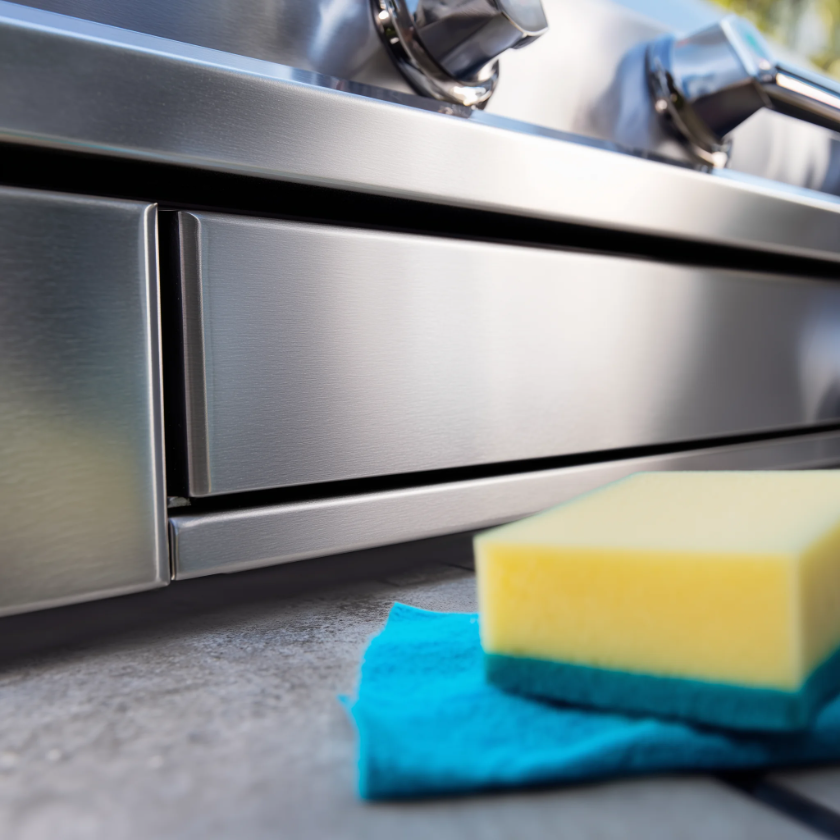
We create simple rules for stainless steel: do not scrub with steel wool or wire brushes. Use a sponge and soapy water for fingerprints and grime. For a deeper shine, products made for stainless steel can help, and Bar Keepers Friend is commonly recommended for this job.
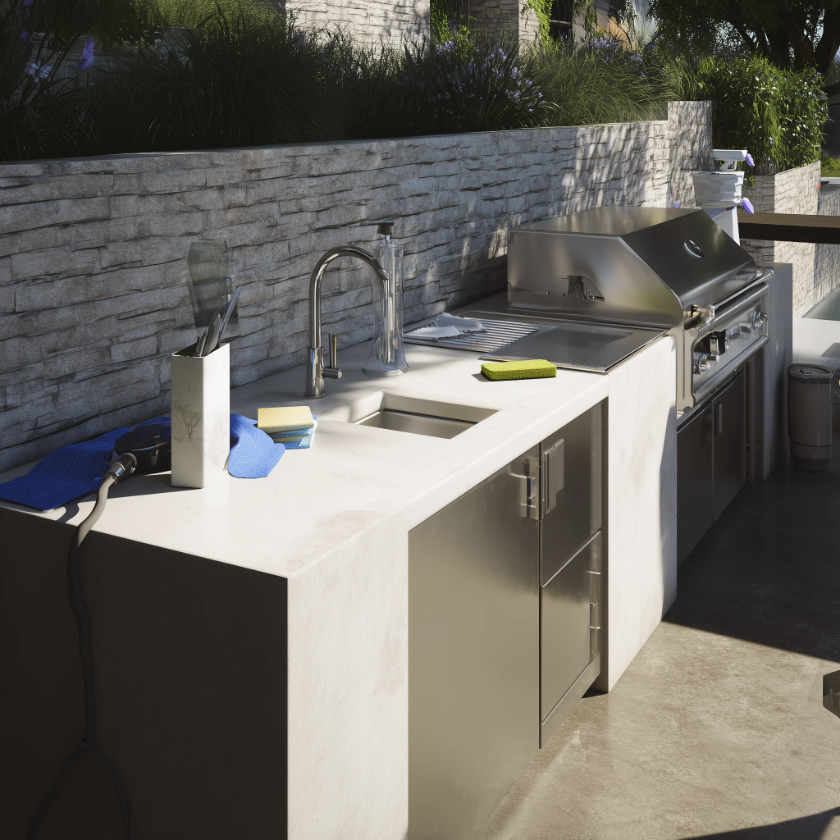
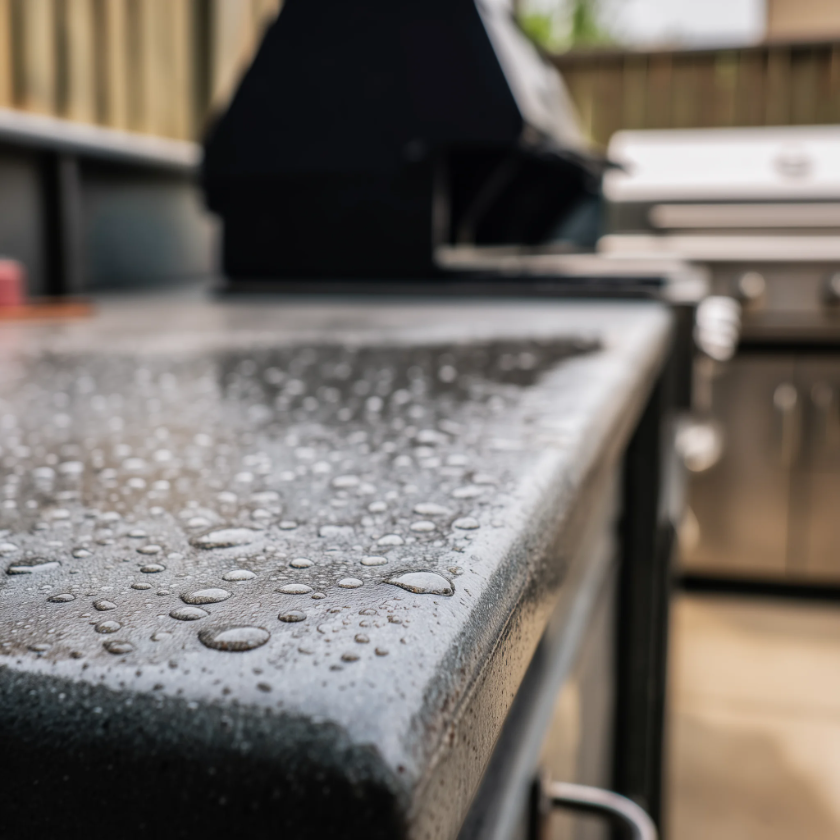
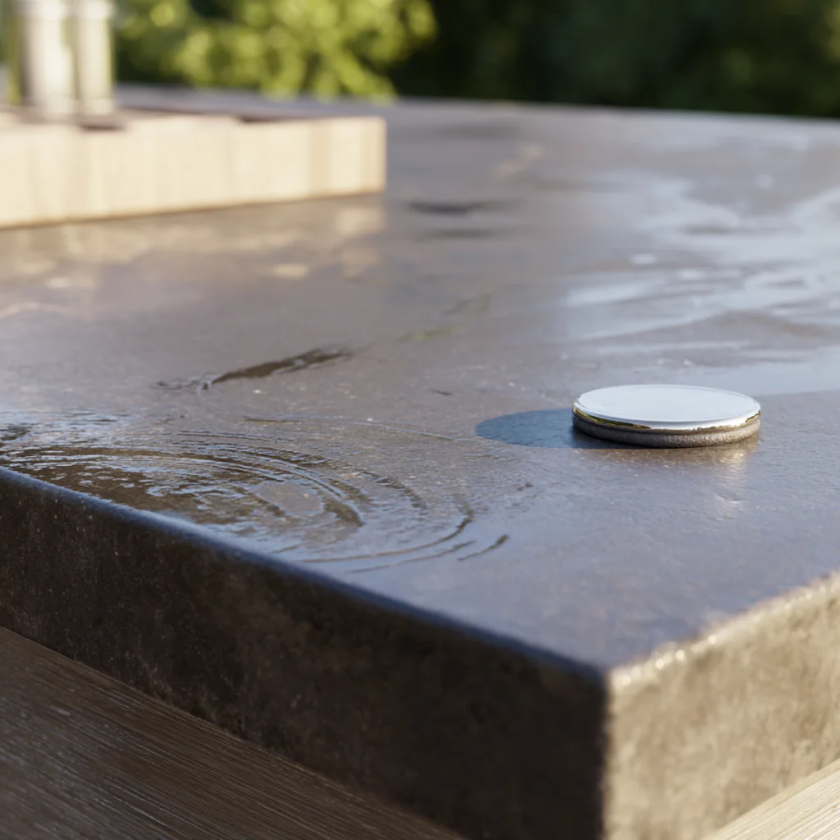
Maintenance is not only “when it looks dirty.” In our company we set reminders. Concrete countertops often need resealing at least once a year, and granite is commonly resealed once or twice a year. A simple water test on granite (10–15 minutes) can show when it is time.
We also create a yearly deep-clean habit for grills to help prevent burner clogging and reduce grease-fire risk. Use grill-safe nylon brushes, not metal.
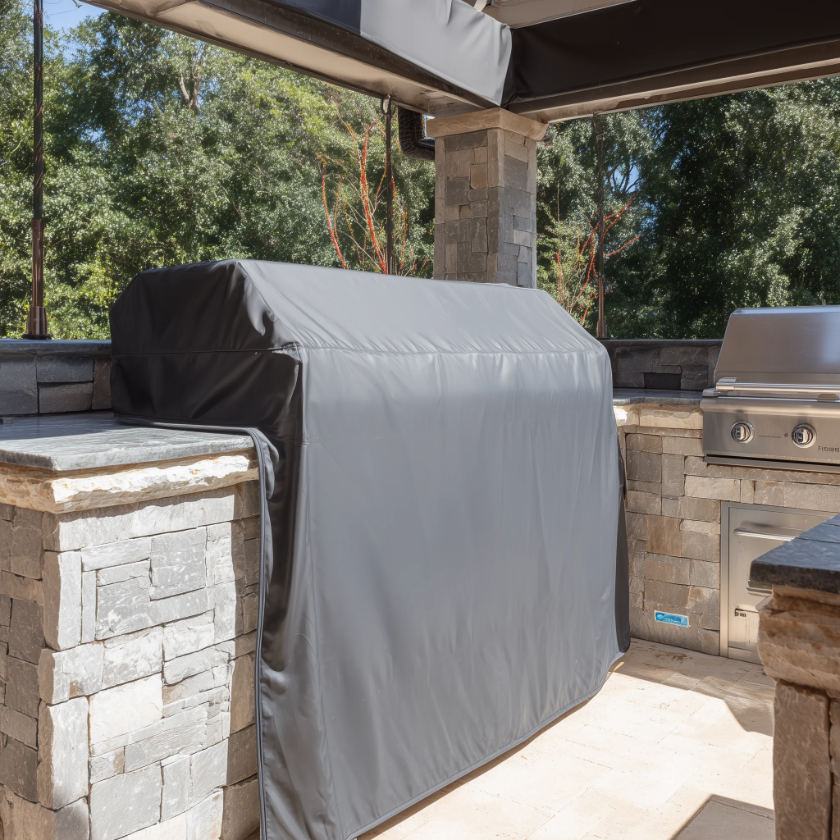
Finally, Ecolit Construction treats covers as part of maintenance. Cover the grill after it cools. Use a full-size cover before storms or long breaks. Cover the island too, especially in freeze/thaw areas, but choose breathable covers so moisture is not trapped underneath. Even under a gazebo, extra cover protection can still make sense.