Extend Your Outdoor Kitchen Season: 4 Gas Patio Heaters to Consider in 2026
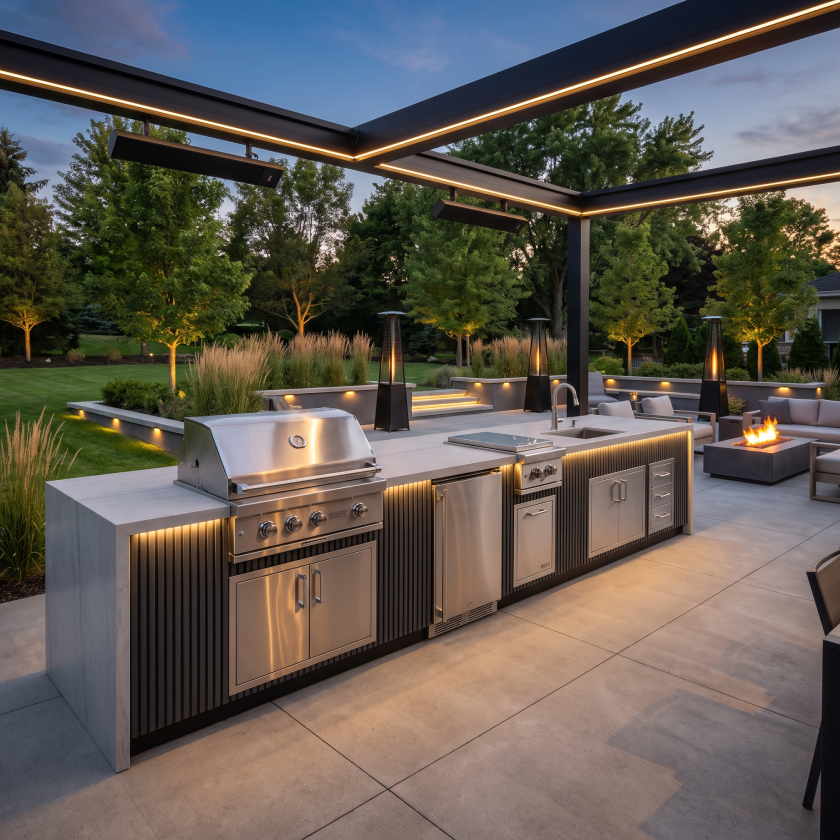
At ECOLIT, we build outdoor kitchens around strong, precisely manufactured 18-gauge galvanized steel framing. The structure of an outdoor kitchen matters, but creating a space people can comfortably use throughout more of the year requires thinking beyond cabinets, grills, countertops, and appliances.
Outdoor heating is one of the most effective ways to extend the usable season of a patio or outdoor kitchen. When evening temperatures begin to fall, a properly selected gas patio heater can make the cooking, dining, and entertaining area considerably more comfortable without changing the fundamental layout of the space.
For homeowners designing a new outdoor kitchen — or upgrading an existing one — the main choice is usually between permanently mounted gas heaters and freestanding units. Below, we look at four currently available gas patio heaters representing different approaches to outdoor heating.
Choosing a Gas Patio Heater for an Outdoor Kitchen
A gas patio heater should be selected as part of the overall outdoor layout rather than treated as an accessory added at the end of the project. The size of the patio, ceiling height, exposure to wind, location of seating and cooking zones, available gas supply, required clearances, and local installation requirements can all affect which type of heater is appropriate.
Mounted heaters are particularly useful when preserving floor space is important. They can be positioned above or around the occupied zone and incorporated into pergolas, covered patios, walls, or other architectural elements. Natural gas models can also eliminate the need to replace propane tanks, although they require a permanent gas connection.
Freestanding heaters provide a different advantage: flexibility. They can be positioned according to how the patio is being used and, depending on the model, moved or stored when heating is not needed. Propane models are particularly useful where there is no permanent natural gas line.
Heat output alone should not determine the choice. Heating pattern, wind performance, mounting height, clearances, fuel type, controls, construction, and safety systems all matter when integrating a heater into an outdoor living environment.
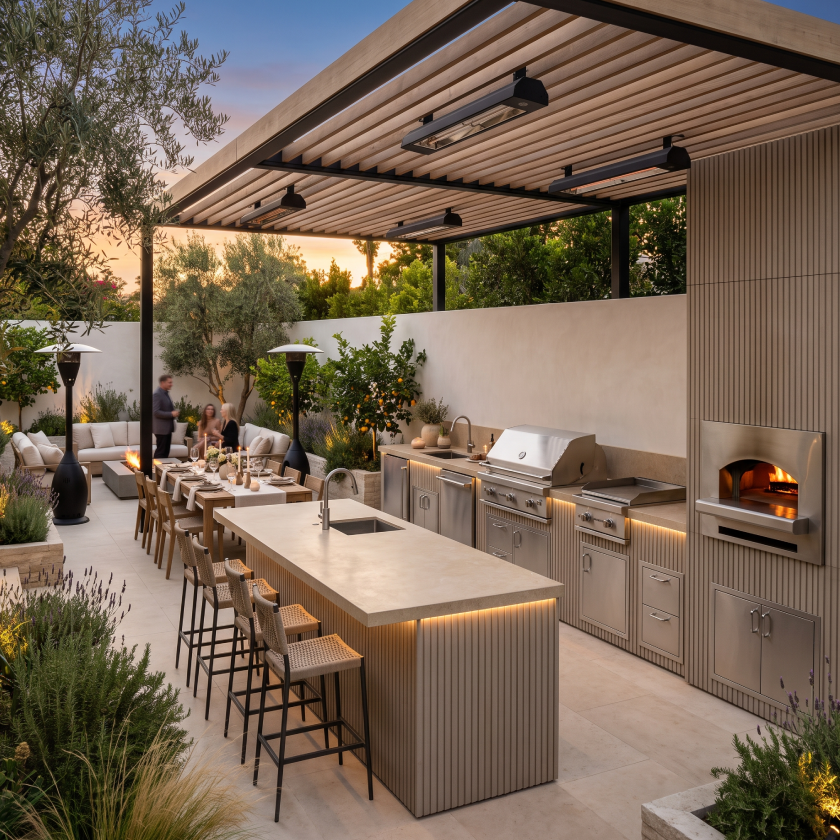
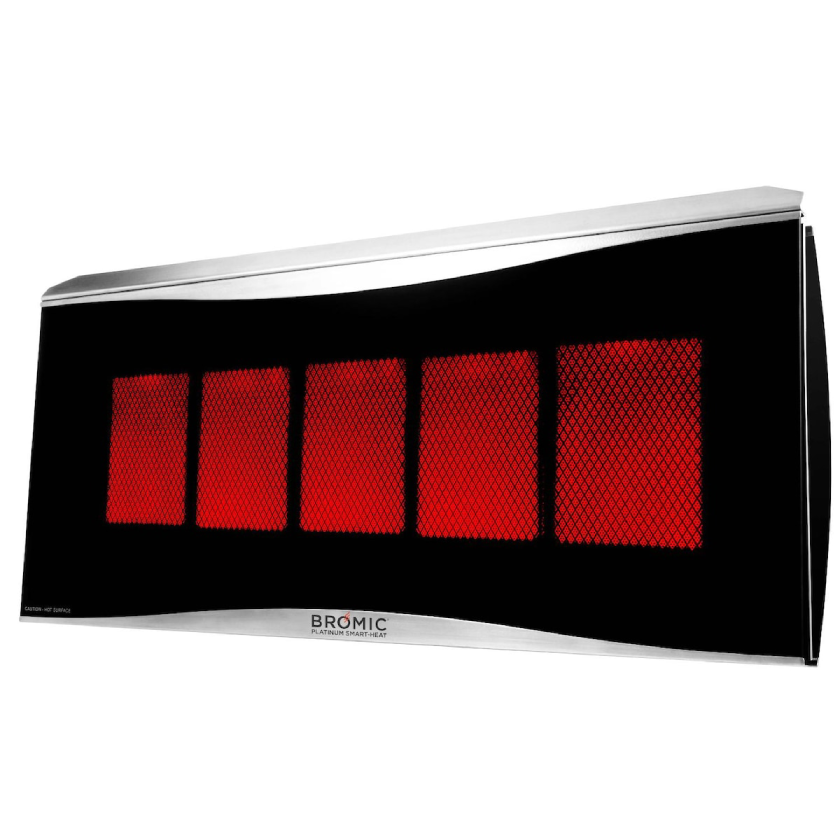
Integrated Ceiling-Mount Option: Bromic Platinum Smart-Heat Gas 500
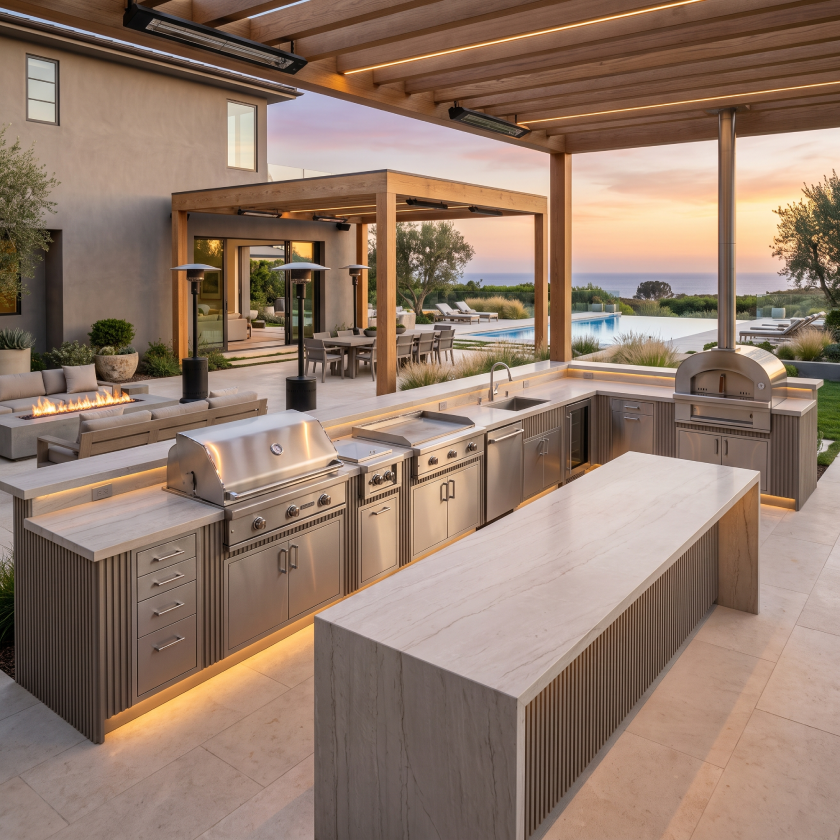
The Bromic Platinum Smart-Heat Gas 500 is designed for permanent wall or ceiling installation and works particularly well in outdoor kitchens located beneath pergolas or covered patios.
The 500 Series produces 39,800 BTU and is rated for a heating area of up to approximately 215 sq. ft. It is available for both natural gas and LPG installations, with black or stainless-steel finishes. Its ceramic-glass fascia distributes radiant heat across the target area, while a pivoting bracket allows the heat direction to be adjusted.
Bromic states that the Platinum Gas series can operate in winds of up to 12 mph. The heater also uses direct electronic ignition rather than a continuously operating pilot light.
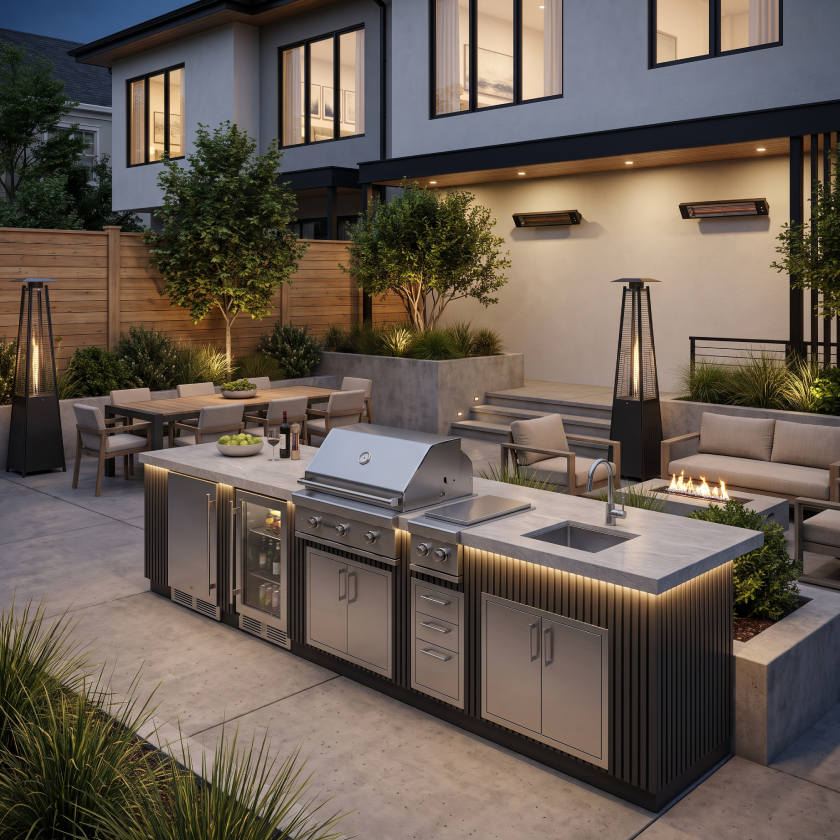
For outdoor-kitchen design, its main advantage is integration. Overhead installation keeps circulation, dining, and kitchen areas unobstructed, making it suitable for spaces where preserving usable floor area is important. Installation must be completed in accordance with manufacturer clearances, local codes, and applicable gas requirements.
Wall-Mounted High-Output Option: Bromic Tungsten Smart-Heat Gas 500
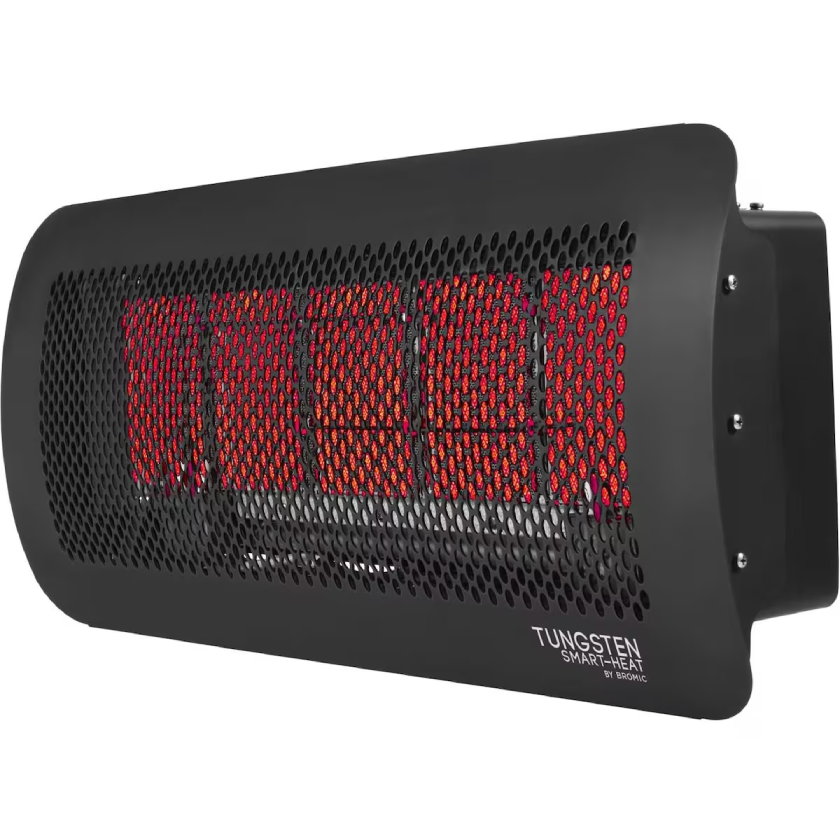
The Bromic Tungsten Smart-Heat Gas 500 provides another permanent heating solution, with a more industrial appearance than the Platinum series. Its matte-black stainless-steel housing works particularly well with contemporary outdoor kitchen designs.
The 500 Series is rated at 43,000 BTU and up to approximately 215 sq. ft. of heating area. Both natural gas and LPG versions are available, and the unit can be installed on either a wall or ceiling.
Bromic rates the Tungsten Gas series for wind conditions of up to 8 mph. Ceramic burners and a mesh screen produce directional infrared heat intended to warm people and surfaces within the heating zone.
Because the heater occupies no usable floor area, it can be positioned toward dining or seating zones while remaining separate from circulation around the outdoor kitchen. Required mounting clearances should be coordinated with pergolas, finishes, lighting, screens, and other nearby elements during the design stage.
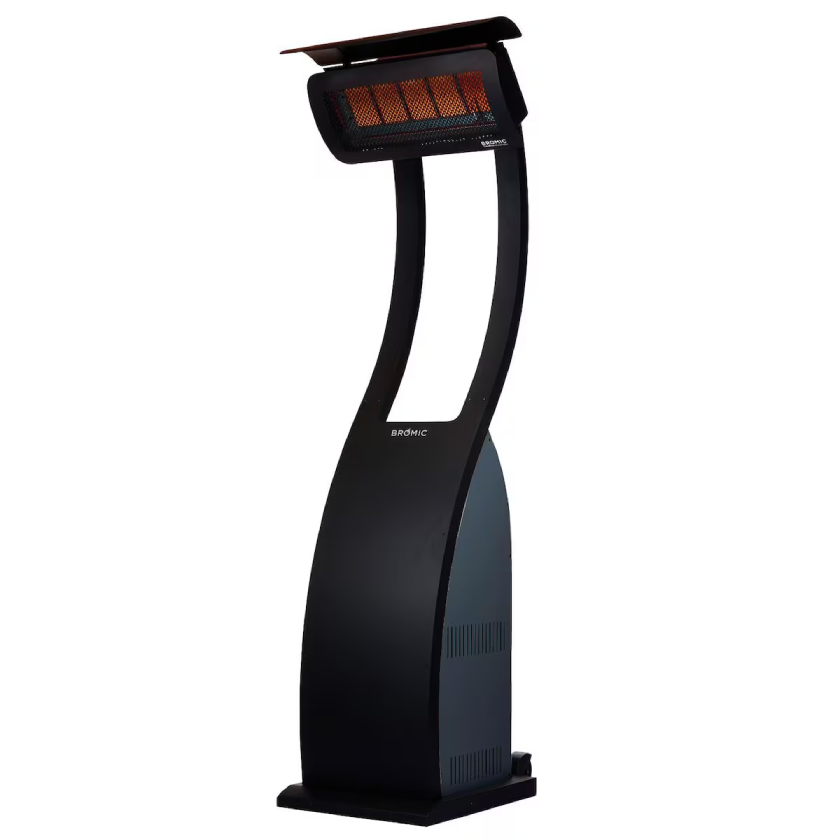
Premium Freestanding Option: Bromic Tungsten Smart-Heat Freestanding
For outdoor spaces where permanent mounting is impractical or unnecessary, the Bromic Tungsten Smart-Heat Freestanding offers a movable alternative.
The current model produces 38,500 BTU and is rated for an area of up to approximately 215 sq. ft. Bromic offers both LPG and natural-gas versions in the U.S. market. An adjustable tilting head directs radiant heat toward the occupied area, while built-in wheels allow the unit to be repositioned.
Bromic rates the freestanding model for wind conditions of up to 8 mph. The propane version uses a standard 20-lb LPG tank and offers adjustable output settings.
This configuration is useful for outdoor kitchens with changing seating arrangements because the heater can be moved between dining, lounge, and other occupied zones. Appropriate ventilation and manufacturer-specified clearances must still be maintained.
Decorative Freestanding Option: RADtec Tower Flame TF-SS
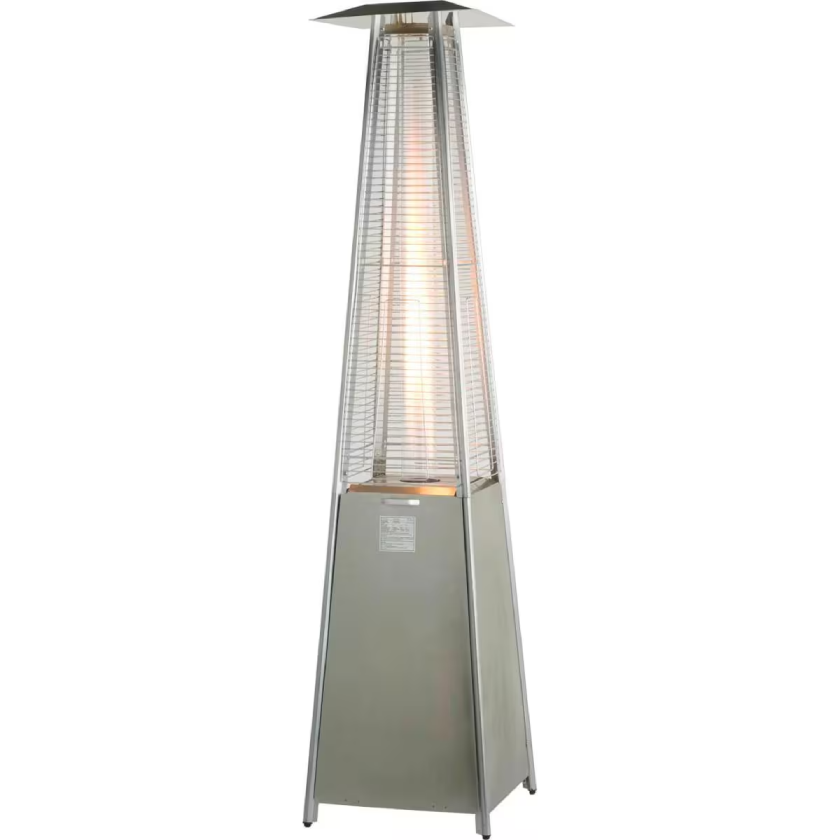
The RADtec Tower Flame TF-SS combines outdoor heating with a prominent visible flame feature, making it as much a visual element as a heating appliance.
The stainless-steel freestanding model stands approximately 89 inches high and uses propane. Published specifications list a maximum output of 41,000 BTU, propane consumption of approximately 1.85 lb per hour, a flame feature approximately 3.5 feet tall, and an IPX5 water-resistance rating.
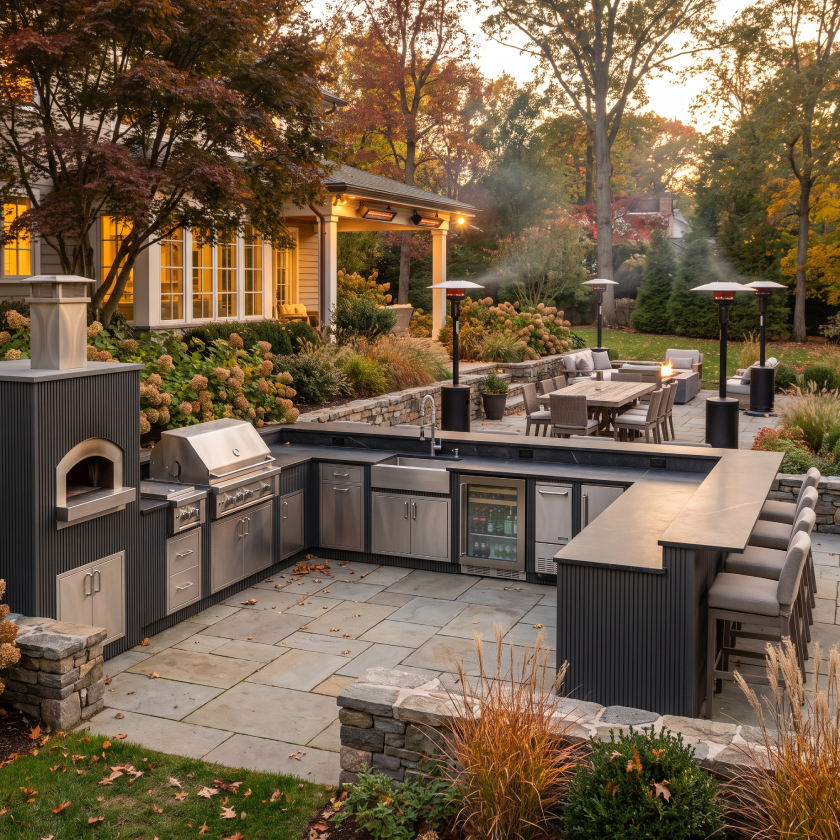
Unlike wall- or ceiling-mounted infrared heaters, the Tower Flame is intended to become part of the patio composition itself. It can work particularly well near lounge or seating areas where the visible flame contributes to the atmosphere of the outdoor space.
Published heating-area figures vary between retailers, so placement should be based on the actual patio configuration, wind exposure, ambient conditions, and manufacturer installation requirements.